
Loading
Loading
Nullam dignissim, ante scelerisque the is euismod fermentum odio sem semper the is erat, a feugiat leo urna eget eros. Duis Aenean a imperdiet risus.
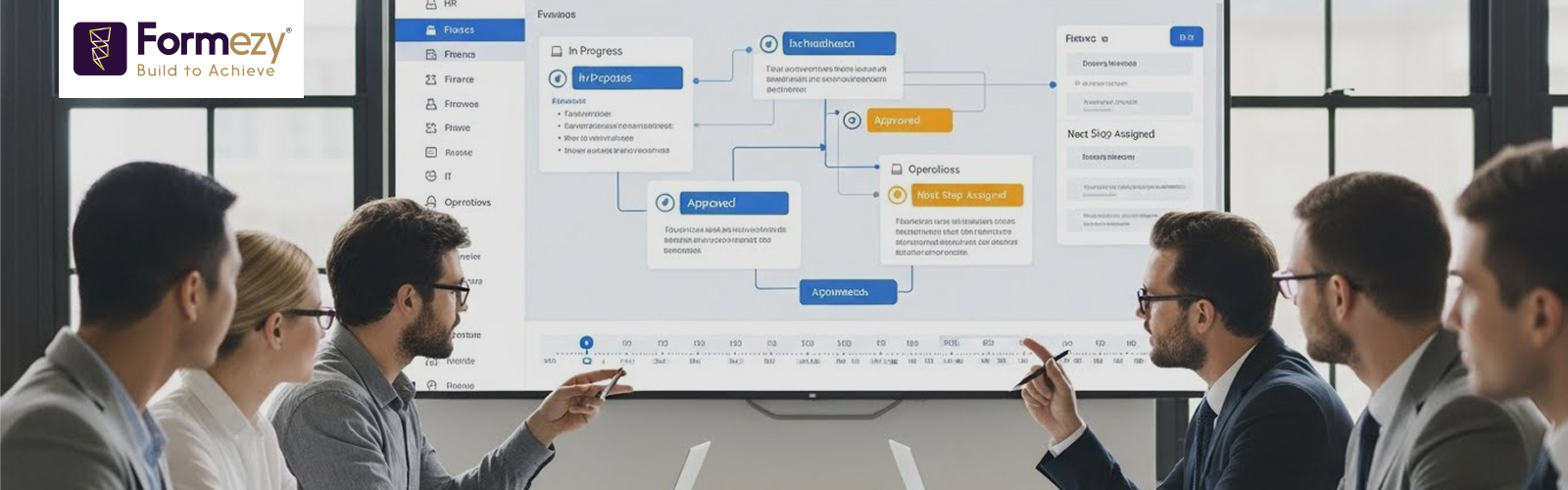
Collaboration across departments has consistently posed a challenge for expanding companies due to isolated teams working within their silos, having distinct methods and systems for completing tasks, and not being connected to each other's workflows. Because Teams within an Organisation can have different priorities, timeframes, and communication policies, duplicate or redundant activities are performed daily, which leads to time and cost inefficiencies.
However, with the advent of advancements in or improved utilisation of Technology, forward-thinking organisations are now opening up the lines of communication with their employees throughout their organisation to improve Team Collaboration. Today, we will be examining how an EAP, Enterprise Automation Platform facilitates collaborative teamwork across departments by breaking down siloed departments where possible so that employees can work seamlessly and instantly with each other.
We will be examining the features of an EAP, its benefits for cross-department collaboration, and why many growing organisations will eventually move to being reliant on this type of technology for everything they do.
Why Cross-Department Collaboration Matters More Than Ever
The speed of today’s market is unparalleled with the utilization of traditional business tools. Teams must have immediate access to current data and automated processes, as well as one centralized source to assist them in carrying out their responsibilities.
Without collaboration automation, companies face:
This is why enterprises now rely on enterprise workflow automation to streamline operations across functions like HR, IT, Finance, Sales, Operations, Procurement, and more.
What an Enterprise Automation Platform (EAP) Really Does
With an Enterprise Automation Platform (EAP) in place, no longer do teams have to depend on the use of emails, manual follow-ups, spreadsheets or various other applications to do their jobs, as they will be able to work seamlessly together within the automated ecosystem that will be created through the EAP.
This shift leads to:
This is the foundation for true EAP collaboration.
How EAP Enables Seamless Cross-Department Collaboration
1. Unified Workflow Integration Across Departments
Workflow integration across departments ensures that every process — from purchase approvals to onboarding to compliance reviews — flows effortlessly from one team to another.
An EAP automates:
No team waits for another. No one loses context.
Processes move forward without delays.
This is the heart of collaboration automation in enterprises.
2. One Platform for All Communication
Most teams still struggle with communication scattered across emails, chats, and offline discussions. A modern EAP provides a unified communication platform for teams, eliminating:
Instead, everything — updates, comments, reminders — stays within the workflow itself.
This makes it far easier for teams to align and reduces the dependency on external business communication tools.
3. Automated Workflows That Reduce Manual Follow-Ups
Manual follow-ups waste hours every day. With enterprise workflow automation, the EAP automatically nudges the right person at the right time.
Automated triggers ensure:
This drastically boosts consistency and productivity across departments.
4. Consistent Data Sharing & Visibility
One of the biggest barriers to collaboration is data stored in isolated systems.
An EAP provides a centralized, real-time data layer for every team.
This means:
Smart business process automation ensures the right people have the right information at the right time.
5. Connected Processes That Eliminate Silos
Traditional workflows are linear and department-specific.
EAP-based workflows are interconnected and enterprise-wide.
This enables:
This is exactly how EAP enables seamless cross-department collaboration.
6. Collaboration Designed for Multi-Team Productivity
Modern enterprises rely on enterprise platforms for digital collaboration to ensure teams don’t operate in isolation.
An EAP enhances productivity by:
It aligns people, processes, and platforms into one smooth flow.
Best EAP Features for Interdepartmental Workflows
Here are the features that make an EAP essential for collaboration:
These features transform how teams work together, effortlessly and without friction.
Impact of Automation on Business Productivity
When processes run automatically and teams communicate within the workflow, productivity multiplies.
Key outcomes include:
This is why global enterprises are replacing outdated tools with smart business process automation powered by EAPs.
Why Modern Enterprises Cannot Function Without EAP Collaboration
Enterprises are now interconnected, distributed, and require speed. Legacy enterprise applications lack the process support necessary for modern enterprise workers. A Modern Enterprise Automation Platform supports the enterprise by providing a single centralized solution for all workflows, communications, data, tasks, approvals, and collaboration, providing a rich ecosystem that can grow with your organisation.
It becomes the backbone of:
This is the future of enterprise work.
Conclusion
Seamless cross-department collaboration isn’t just a ‘nice-to-have’. It’s the difference between a fast, synchronized enterprise and an organization stuck in silos.
With a powerful EAP, companies achieve:
This is how modern organizations scale smarter, with the right automation foundation guiding every team.